TMJ Anatomy: Complete Visual Guide to the Jaw Joint Near Your Ear
Introduction
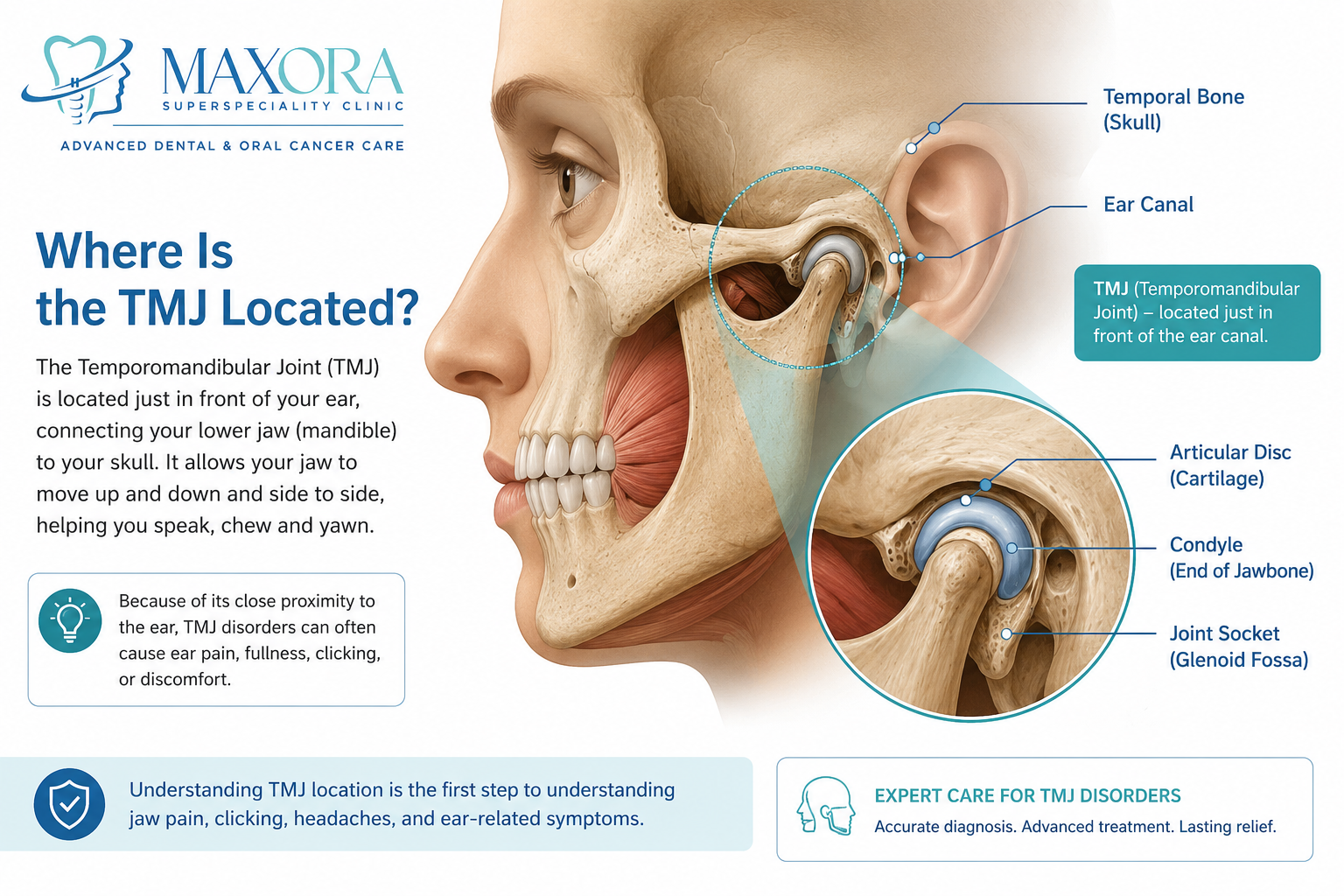
The temporomandibular joint (TMJ) is one of the most complex joints in the human body. Located just in front of the ear, it allows you to speak, chew, yawn, and move your jaw smoothly. Understanding TMJ anatomy can help explain symptoms such as jaw clicking, jaw pain, ear discomfort, headaches, and jaw locking.
WHERE IS THE TMJ LOCATED?
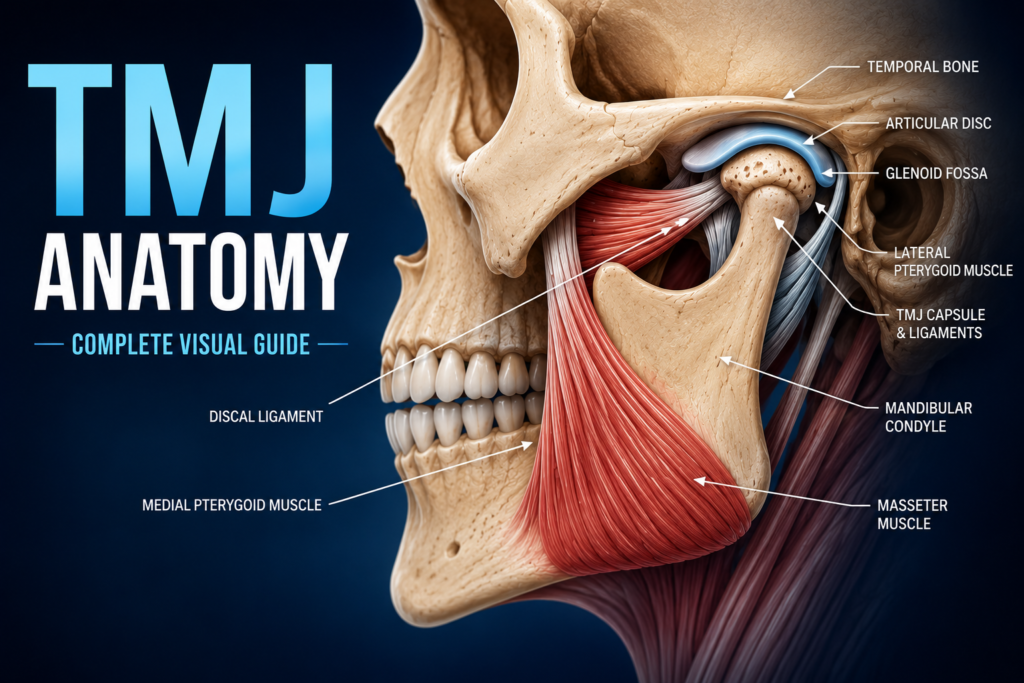
The temporomandibular joint (TMJ) is located directly in front of the ear and connects the lower jaw to the skull, allowing speaking, chewing, and jaw movement.
Parts of the Temporomandibular Joint
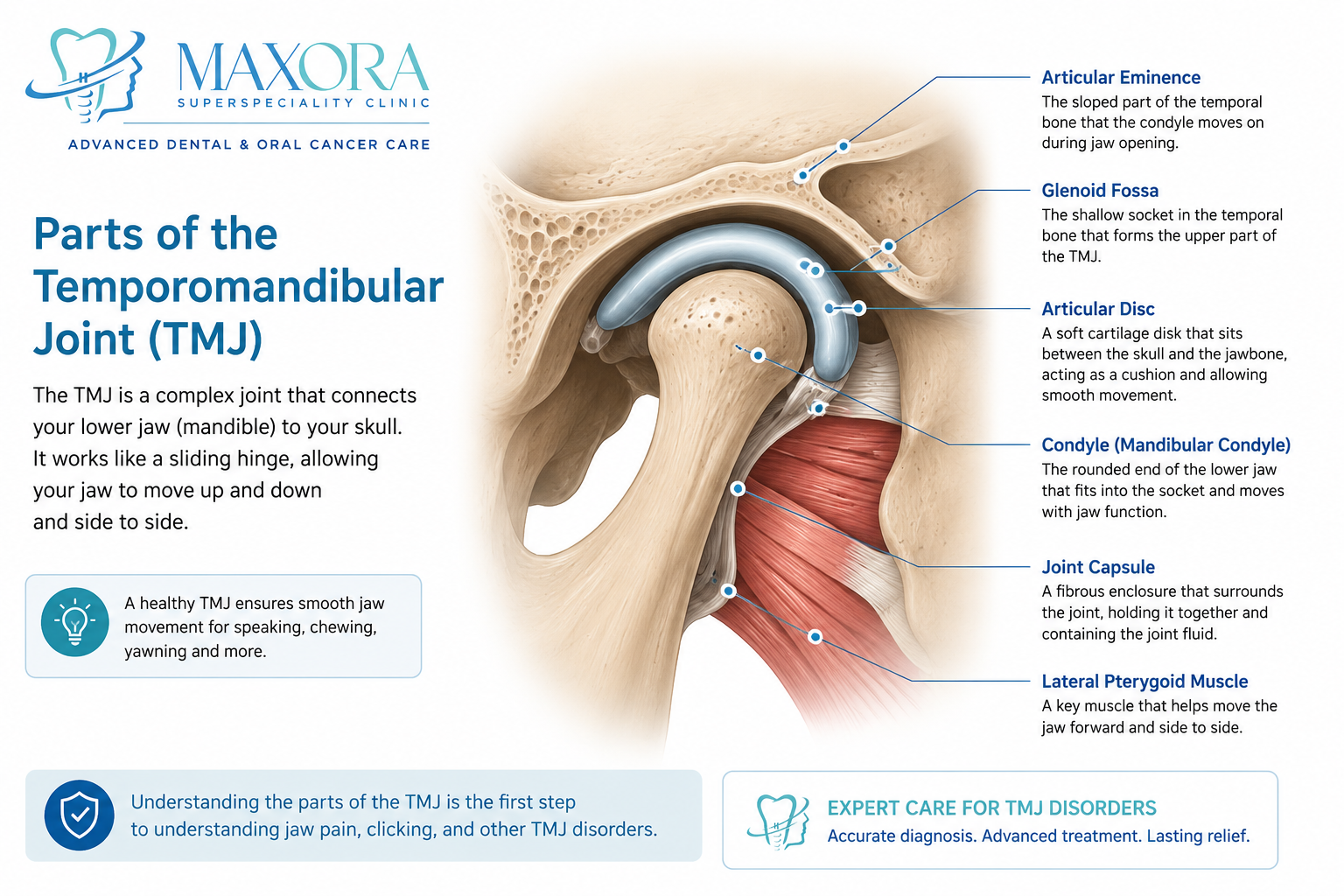
The temporomandibular joint (TMJ) consists of several structures including the articular disc, condyle, joint capsule, and surrounding muscles that work together to allow smooth jaw movement.
TMJ Disc Anatomy
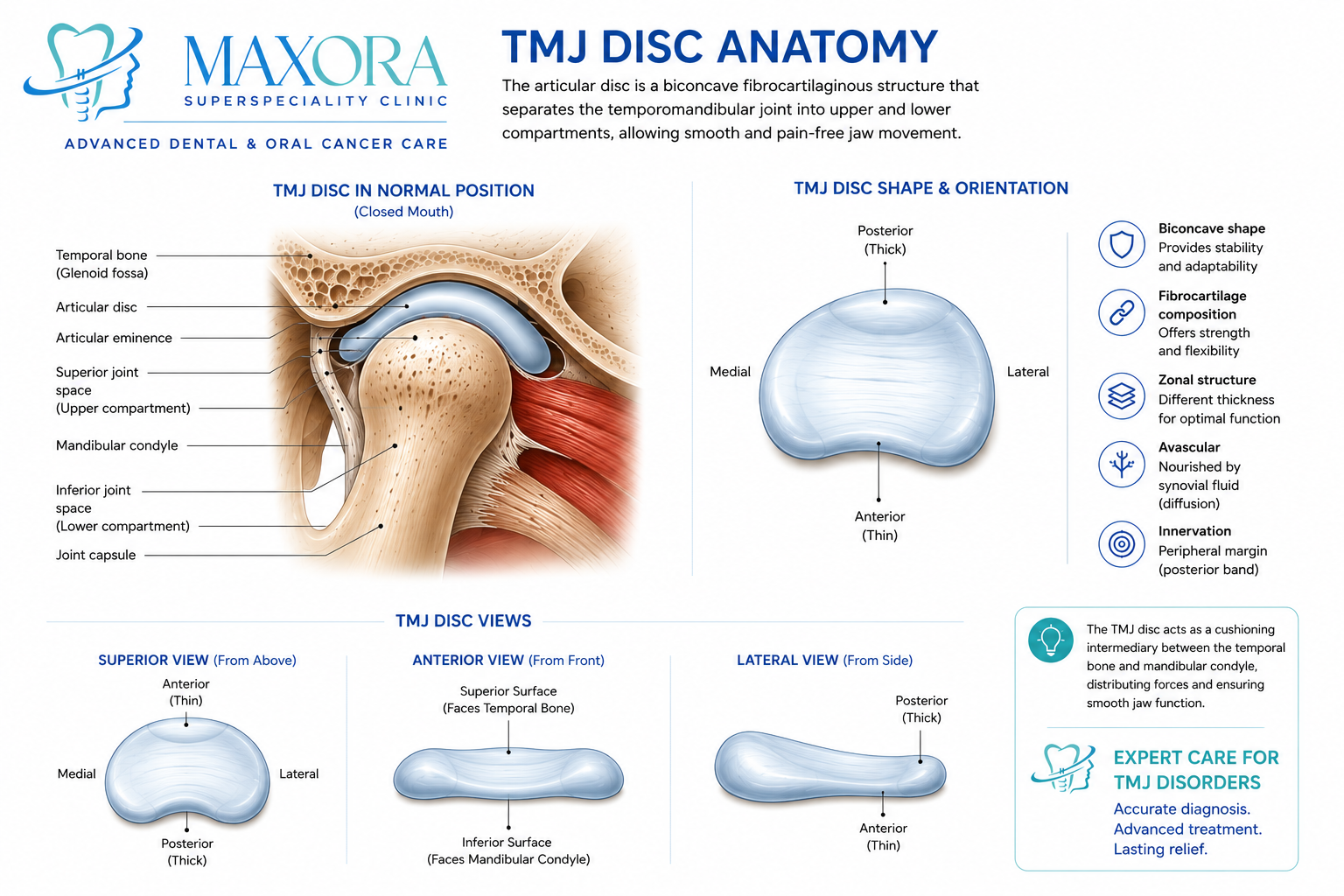
The TMJ disc is a specialized fibrocartilaginous structure positioned between the mandibular condyle and temporal bone. Its unique biconcave shape helps distribute forces, absorb shock, and ensure smooth jaw movement during speaking, chewing, and yawning.
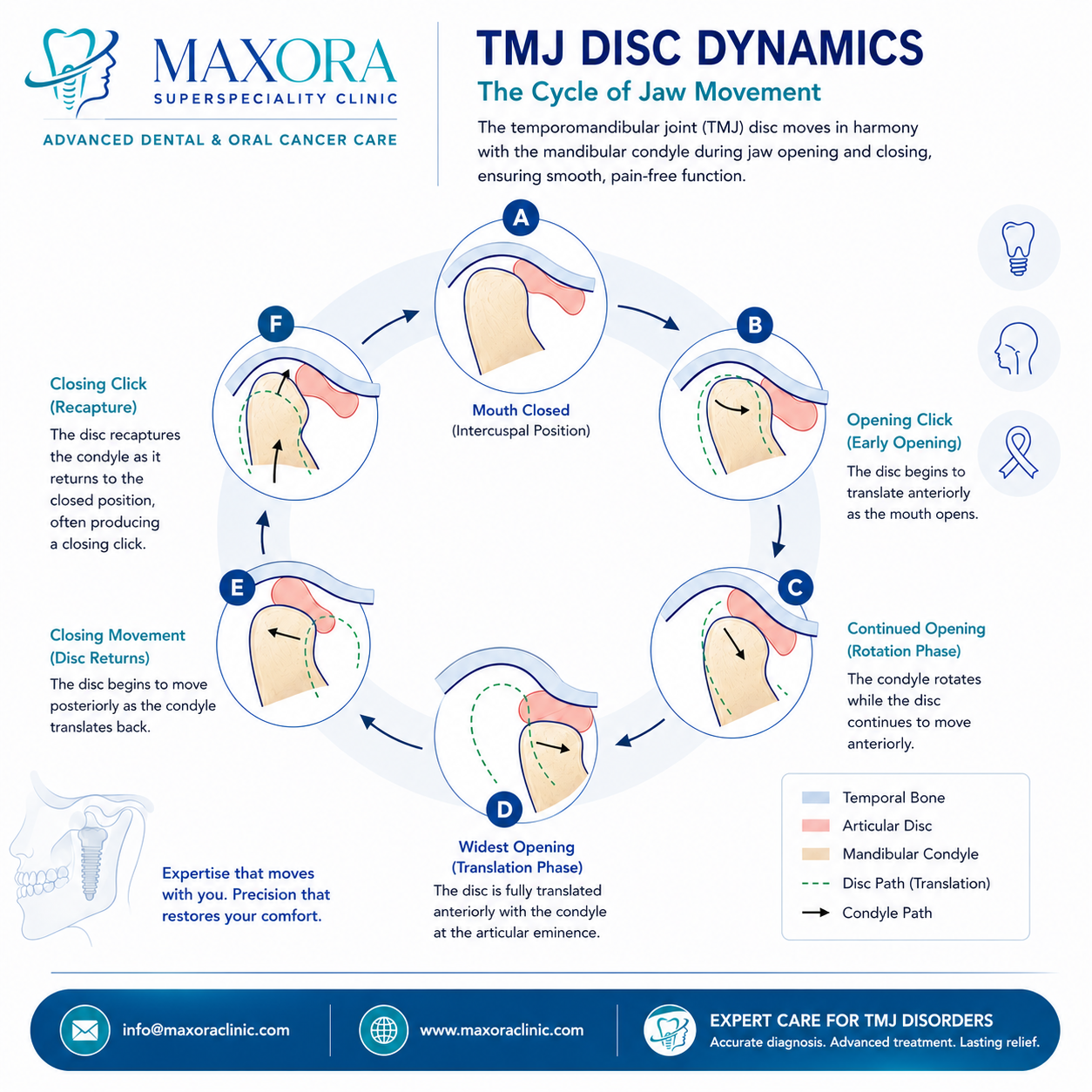
WHY DOES THE JAW CLICK?
TMJ Inflammation
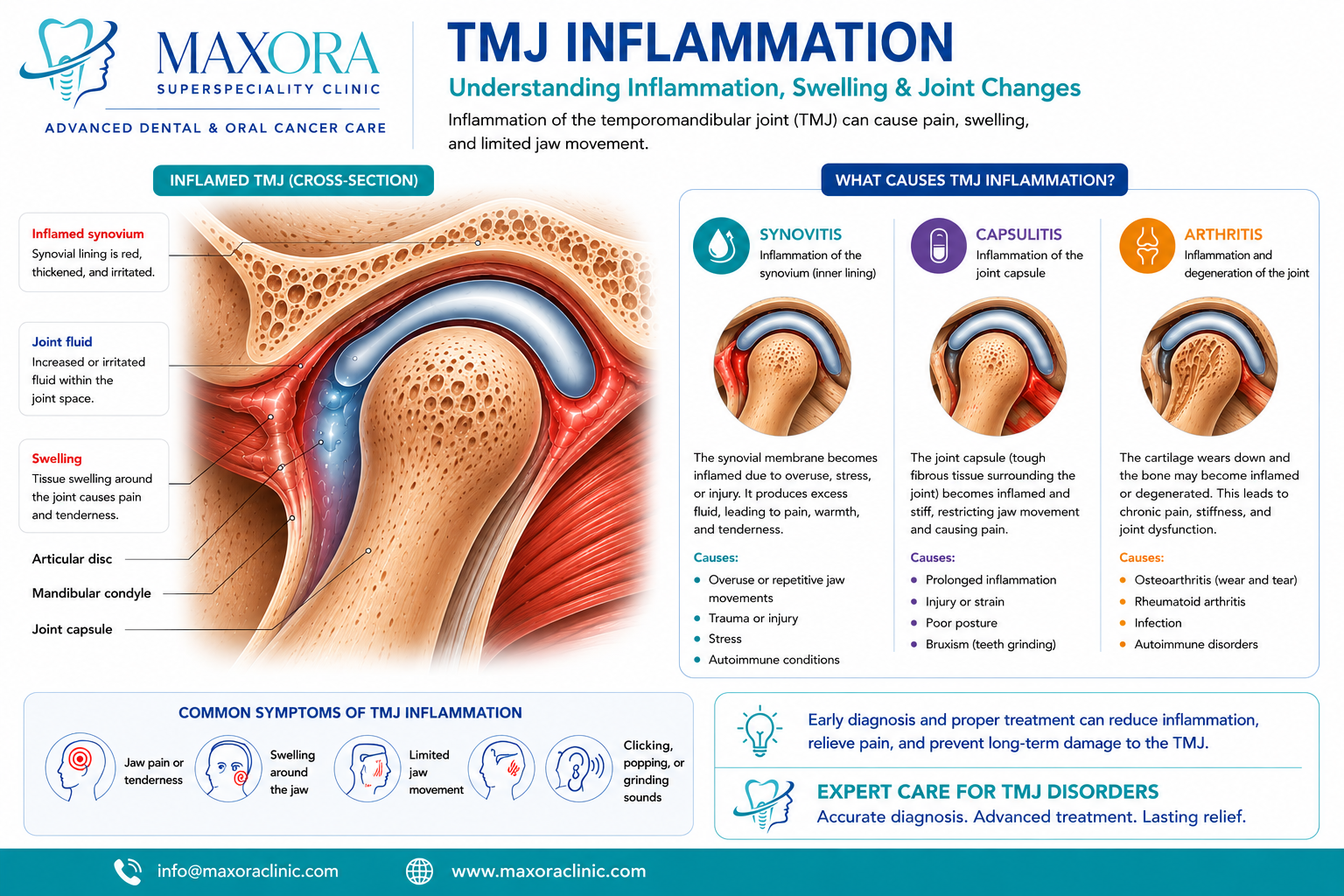
Cross-sectional TMJ inflammation demonstrating synovitis, capsulitis, and arthritis, highlighting how inflammation within the jaw joint can lead to pain, swelling, restricted movement, and joint dysfunction.
Frequently Asked Questions
Is jaw clicking normal?
Occasional painless clicking is relatively common and often harmless.
Can jaw clicking disappear on its own?
Yes. Mild disc displacement may stabilize without treatment.
Can wisdom teeth cause jaw clicking?
Wisdom teeth themselves rarely cause clicking but may aggravate TMJ symptoms through associated inflammation or muscle spasm.
Should I avoid opening my mouth wide?
Patients with TMJ symptoms should avoid excessive mouth opening during yawning, singing, or prolonged dental procedures.
Book a TMJ Evaluation at Maxora Superspeciality Clinic
If you are experiencing jaw clicking, jaw pain, headaches, or difficulty opening your mouth, our team can help identify the underlying cause and recommend the most appropriate treatment.